
 By
By 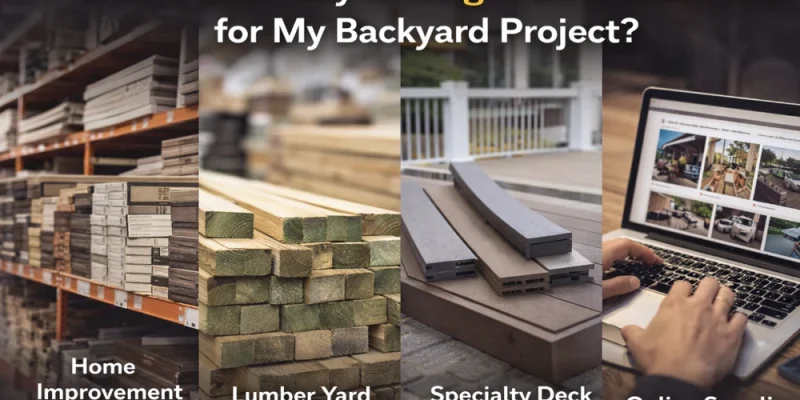
Building a backyard deck can make your outdoor space more useful and comfortable. Maybe you want a place to enjoy morning coffee, have dinner outside, or just spend time with family. Whatever the plan, choosing the right materials is one of the most important parts of the project.
But knowing where to buy deck materials isn’t always simple.
You can find decking boards at home improvement stores, local lumber yards, specialty decking suppliers, and online retailers. Each option offers different products, prices, and levels of service.
And buying the cheapest materials isn’t always the best decision. Some boards require more maintenance, certain fasteners only work with specific decking systems, and lower-quality lumber can cause problems during installation.
So, before you start ordering materials, it helps to understand what you’re buying and where to find it.
What Deck Materials Do You Need for a Backyard Project?
Before visiting a decking supplier, make a complete list of the materials your project requires.
It’s easy to focus on the deck boards because they’re the part everyone sees. But a deck also needs a properly designed support structure, safe connections, and suitable hardware.
Depending on the design, your shopping list may include:
- Decking boards: The walking surface, usually made from pressure-treated wood, cedar, composite, PVC, or another decking material.
- Framing lumber: Joists, beams, and other structural components that support the deck.
- Support posts: Structural posts sized and installed according to the approved design.
- Deck footings: Concrete, approved footing systems, or other foundation materials suitable for your soil and local requirements.
- Railings and balusters: Safety features required for certain deck heights and configurations.
- Stair materials: Stringers, treads, risers, and handrails where needed.
- Joist hangers and connectors: Approved structural hardware that helps connect framing components.
- Deck screws or hidden fasteners: Corrosion-resistant fasteners compatible with the decking material.
- Flashing and waterproofing products: Materials that help manage moisture and protect vulnerable connections.
- Finishes and sealers: Products used to protect certain wood decking surfaces.
You may not need every item on this list. A ground-level platform deck, for example, can have different requirements than a raised deck connected to a house.
For structural components, use a deck plan that meets applicable building codes. This helps you purchase the correct sizes, grades, and quantities instead of guessing.
Where Can You Buy Deck Materials?
There isn’t one perfect supplier for every backyard deck project. The best place to shop depends on your budget, material preferences, deck size, and how much help you need.
Here are the most common options.
1. Home Improvement Stores for Basic Decking Supplies
Large home improvement stores are often the first place homeowners visit when shopping for deck materials.
Retailers such as Home Depot and Lowe’s typically carry common products, including pressure-treated lumber, deck screws, concrete products, railing components, and selected composite decking lines.
For a smaller backyard deck, these stores can be a convenient starting point.
You can walk through the lumber section, compare products, and check available sizes before buying.
Why homeowners choose home improvement stores:
- Convenient locations and accessible shopping hours
- Common framing and decking materials in one place
- Online inventory and ordering options
- Basic installation supplies and tools
- Delivery services at participating locations
The main limitation is product availability.
A store might carry the deck board you want but not the matching railing, fascia, or hidden fastening system. Certain colors and longer board lengths may also require special orders.
If you’re planning a larger project, check the full product availability before purchasing the first batch.
2. Local Lumber Yards for Wood Deck Materials
A local lumber yard is another good option, especially if you’re building a traditional wood deck.
Lumber yards often specialize in construction wood and may carry a wider selection of lumber grades, dimensions, and species.
Depending on the supplier, you may find pressure-treated pine, cedar, redwood, and other products suitable for outdoor construction.
One advantage is the opportunity to ask questions about lumber quality and intended use.
For example, lumber intended for deck framing must meet the structural and treatment requirements for its installation location. Wood used near the ground may need a different preservative treatment rating than boards installed well above it.
A knowledgeable lumber supplier can help you identify products that match the specifications in your deck plan.
What to check at a lumber yard:
- Available lumber grades and treatment ratings
- Board straightness and visible damage
- Available lengths and dimensions
- Delivery options for large orders
- Material return and replacement policies
It’s worth mentioning that lumber yards don’t automatically have better wood than home improvement stores. Quality varies by supplier, inventory, and product grade.
The best approach is to compare the actual materials and specifications rather than assuming one type of store is always better.
3. Specialty Decking Suppliers for Composite and PVC Decking
If you’re planning a more customized outdoor space, a specialty decking supplier may offer more options.
These businesses focus on decking products and related accessories. Some carry extensive selections of composite decking, PVC decking, decorative railings, lighting systems, and matching trim.
They may also provide manufacturer-approved installation information and product samples.
This is useful when you’re trying to coordinate several details, such as board colors, stair edges, fascia, and railing finishes.
Specialty suppliers are particularly helpful for projects involving:
- Picture-frame deck borders
- Composite or PVC decking systems
- Hidden fastening systems
- Decorative railings
- Integrated deck lighting
- Custom stairs and trim details
- Matching fascia and finishing accessories
For example, some composite decking systems require specific fasteners or installation spacing. Buying incompatible accessories could affect installation quality or warranty coverage.
A specialty supplier can help you verify which components belong together.
Just remember that even a decking specialist shouldn’t replace a qualified deck designer or engineer when structural calculations or permit documents are required.
4. Online Decking Suppliers for Product Research and Ordering
Shopping online makes it easier to compare decking materials without visiting several stores.
Many manufacturers and retailers provide detailed product pages with board dimensions, available colors, technical specifications, and installation instructions.
You can also review warranty terms and maintenance requirements before deciding what to purchase.
Online suppliers can be especially useful when you’re searching for specialty accessories or products unavailable locally.
However, ordering decking materials online requires a little caution.
Colors sometimes look different on a screen. Board textures can also be difficult to judge from photographs.
And long decking boards may require freight delivery, which can significantly affect the total price.
Before placing a large online order, consider requesting physical samples and confirming shipping, damage claims, and return conditions.
Wood vs. Composite vs. PVC: Which Decking Material Should You Buy?
Choosing the right supplier is easier once you know what decking material you want.
Each material has different costs, maintenance needs, and performance characteristics.
Pressure-Treated Wood
Pressure-treated lumber is a common choice for backyard decks because it’s widely available and generally costs less upfront than many composite or PVC options.
It’s treated to resist decay and insect damage when the correct treatment category is used.
However, wood decking usually needs periodic cleaning and may require staining or sealing. It can also split, warp, or develop surface wear over time.
Cedar and Redwood
Cedar and redwood are often chosen for their natural appearance.
They can offer good outdoor performance when properly selected, installed, and maintained.
These materials may cost more than standard pressure-treated lumber, and availability varies by region.
They still need maintenance to help manage weathering and preserve their appearance.
Composite Decking
Composite decking is typically manufactured using a combination of plastic materials and wood fibers or other fillers, depending on the product.
It’s popular because it generally requires less routine finishing than natural wood.
You won’t usually need to stain or paint it, although cleaning is still necessary.
Composite boards can cost more upfront and may become hot in direct sunlight. Expansion, spacing, and fastening requirements also vary by manufacturer.
PVC Decking
PVC decking is manufactured primarily from plastic rather than wood fibers.
It’s designed to resist moisture-related deterioration and generally doesn’t require staining or sealing.
This can make it appealing for homeowners who want a low-maintenance deck surface.
However, PVC boards may have a higher initial price, and installation requirements differ between product lines.
Before buying, compare the manufacturer’s specifications for heat, expansion, slip resistance, fastening, and warranty coverage.
Comparing Common Decking Materials
| Decking material | Initial cost | Maintenance | Best suited for |
| Pressure-treated wood | Generally low | Regular cleaning and periodic finishing | Budget-conscious projects |
| Cedar or redwood | Moderate to high | Cleaning and periodic finishing | Natural wood appearance |
| Composite decking | Moderate to high | Routine cleaning | Lower-maintenance outdoor spaces |
| PVC decking | Generally high | Routine cleaning | Moisture-exposed, low-maintenance surfaces |
These are general comparisons. Actual prices and performance depend on the product, local climate, supplier, and installation conditions.
How to Compare Deck Material Suppliers Before Buying
Finding a nearby store is easy. Finding a supplier that carries everything your project needs can take more effort.
Before choosing where to buy your deck materials, compare a few important factors.
Check Product Quality and Specifications
Not all decking products are made for the same purpose.
Decking boards, framing lumber, and structural connectors must meet the requirements of their intended applications.
For wood products, check the species, grade, dimensions, and treatment rating.
For composite and PVC products, review the manufacturer’s installation instructions and technical information.
For fasteners and connectors, confirm material compatibility and corrosion resistance.
This is especially important in coastal areas or other environments where metal corrosion can be a concern.
Compare the Total Material Cost
It’s tempting to compare suppliers based only on the price of each deck board.
But the board price is just one part of the expense.
A complete decking order may also include framing materials, fasteners, railings, stairs, delivery charges, and finishing accessories.
Ask suppliers for an itemized quote using the same material list and specifications.
That makes it easier to compare prices fairly.
A slightly more expensive board might also require a different fastening system, which changes the overall cost.
Ask About Delivery and Material Handling
Decking boards can be long, heavy, and difficult to transport.
For larger projects, delivery may be more practical than trying to bring everything home yourself.
Before ordering, ask whether the supplier offers delivery and how materials will be unloaded.
You should also check whether delivery includes placement near the project area or only curbside drop-off.
This small detail can matter quite a bit when you’re receiving a large lumber order.
Review Return Policies and Product Warranties
Construction projects don’t always go exactly as planned.
You might order too many boards, discover damaged materials, or need to exchange an accessory.
Ask about return policies before making a purchase.
Some suppliers accept returns on standard stock materials but restrict returns on special-order products.
For composite and PVC decking, read the manufacturer’s warranty carefully. Coverage, exclusions, registration requirements, and installation conditions vary.
How Much Decking Material Should You Order?
One of the easiest mistakes is purchasing materials before completing the deck layout.
You might know the overall deck size, but that doesn’t automatically tell you how many boards to buy.
Board lengths, spacing, installation direction, stairs, and decorative patterns all affect material quantities.
For example, a simple rectangular deck generally creates less cutting waste than a deck with angled corners or picture-frame borders.
A common planning approach is to allow extra decking material for cuts and waste. Roughly 5% to 10% may be a starting allowance for a straightforward layout, while complicated designs can require more.
But don’t use that percentage as a substitute for an actual board layout.
A better approach is to:
- Confirm the deck’s finished dimensions.
- Choose the actual decking product and board lengths.
- Create a board layout that accounts for required spacing.
- Calculate the number of full boards and cuts.
- Add a reasonable waste allowance.
- Verify quantities before placing the order.
For framing, footings, railings, and structural hardware, quantities should come from the approved design and applicable code requirements.
Many decking suppliers can help estimate finish-material quantities if you provide a clear plan.
Common Mistakes to Avoid When Buying Deck Materials
Even a well-planned backyard deck can become more expensive when materials are purchased incorrectly.
Here are a few mistakes worth avoiding.
Buying Materials Before Finalizing the Design
Changing deck dimensions after purchasing boards can lead to unnecessary cuts, leftover material, or additional orders.
Try to finalize the layout before buying large quantities.
Choosing the Cheapest Boards Without Checking Quality
A lower price doesn’t always mean better value.
Check whether the material is suitable for outdoor use, the intended structural application, and your local environment.
For visible wood boards, inspect for excessive twisting, splitting, or other defects.
Forgetting About Compatible Fasteners
Different decking products may require different screws, clips, or mounting systems.
Using the wrong fasteners can affect the appearance and performance of the finished deck.
Always follow the manufacturer’s fastening requirements.
Ignoring Local Building Requirements
Deck construction may involve permits, inspections, footing requirements, railing standards, and structural design rules.
These requirements can vary depending on location, deck height, attachment method, and other factors.
Confirm local requirements before purchasing structural materials or beginning construction.
Ordering Without Checking Availability
If you need matching boards, fascia, and railings, verify that the required products are available in the quantities you need.
Otherwise, you may complete part of the deck and then discover that a matching finish is unavailable.
Questions to Ask a Deck Material Supplier
Before you commit to a purchase, a short conversation with the supplier can help prevent problems.
Consider asking:
- Do you carry the complete decking system I need?
- Are the materials suitable for my local weather conditions?
- What sizes, colors, and board lengths are available?
- Which fasteners and accessories are compatible?
- Can you provide an itemized material estimate?
- What are the delivery charges and unloading arrangements?
- What happens if materials arrive damaged?
- Can unused materials be returned?
- Are installation guides and warranty documents available?
You don’t have to ask every question in one visit.
But getting these details before ordering can make the building process much smoother.
Frequently Asked Questions About Buying Deck Materials
Where Is the Best Place to Buy Deck Materials?
Home improvement stores are convenient for common decking supplies, while local lumber yards can provide additional wood choices and knowledgeable assistance. Specialty decking suppliers are often useful for composite, PVC, and more customized projects. The best choice depends on the materials and services your project requires.
Is It Cheaper to Buy Deck Materials From a Lumber Yard?
Not necessarily. Prices vary depending on location, material grade, order size, and current inventory. A lumber yard may offer competitive pricing for larger lumber orders, but it’s best to compare itemized quotes from multiple suppliers.
Can I Buy Deck Materials Online?
Yes. Many retailers and specialty suppliers offer online ordering. However, it’s important to verify product specifications, freight charges, delivery arrangements, and return policies. Requesting samples can also help when choosing composite or PVC decking colors.
Should I Buy All My Deck Materials From One Supplier?
Buying everything from one supplier can simplify delivery and product coordination, but it isn’t required. Some homeowners purchase structural lumber from a local lumber yard and finish decking from a specialty supplier. Just confirm that the materials and components are compatible.
What Is the Most Affordable Decking Material?
Pressure-treated wood is often one of the most affordable decking options upfront. However, maintenance and replacement costs should also be considered when comparing its long-term value with composite or PVC decking.
When Should I Order Deck Materials?
Ideally, order after the deck design, required approvals, material specifications, and quantities are finalized. Check supplier lead times early, particularly for special-order colors, railings, and accessories.
Final Thoughts
Finding the right place to buy deck materials is about more than choosing the nearest hardware store.
You want a supplier that offers the materials your project needs, provides reliable product information, and helps you avoid costly ordering mistakes.
For a simple wood deck, a home improvement store or lumber yard may have everything you need. For a custom deck with composite boards, coordinated railings, or special finishing details, a specialty decking supplier may be worth considering.
Take some time to compare materials, ask questions, and review the complete cost before purchasing.
A little extra planning at this stage can save you a lot of frustration later. And when your deck is finally finished, you’ll be glad you chose materials that fit both your backyard and the way you want to use it.
This post was written by a professional at Anawalt Lumber. Anawalt Lumber is a family-owned lumber yard and hardware store Los Angeles for over a century. Known for quality lumber, contractor supplies, hardware, and a full-service nursery, Anawalt provides personalized service for homeowners and licensed contractors. From job pricing and bulk discounts to special-order materials with fast delivery, Anawalt is your trusted local building supply partner in Malibu, West LA, and Hollywood.



Comments