
 By
By 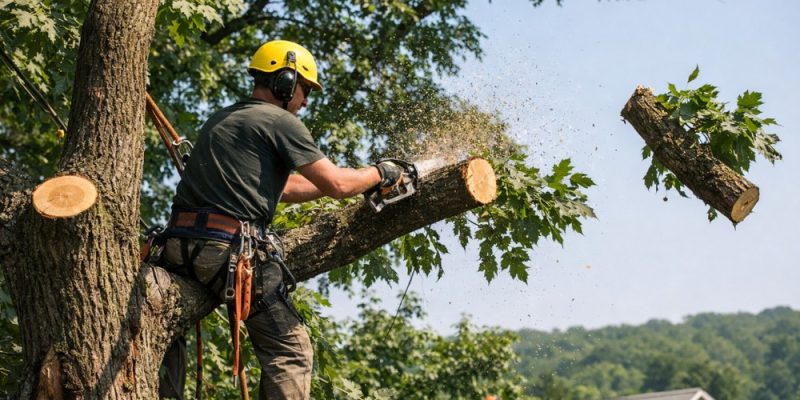
Tree trimming is one of those things many property owners know they should do, but they are not always sure when. Some wait until branches look messy. Others wait until a limb starts hanging too low, rubbing the roof, or getting too close to power lines. By then, the tree may already be stressed.
So, how often should you trim your trees?
The honest answer is that it depends on the type of tree, its age, its health, and where it is growing. There is not one perfect schedule for every yard. Still, there are some general recommendations that can help.
Young trees usually need trimming more often than mature ones. That may sound backward at first, but early pruning helps shape the tree while it is still developing. A young tree may need attention every one to three years to encourage strong branch structure and reduce future problems. This kind of trimming is less about appearance and more about long-term health and stability.
Mature trees, on the other hand, often need less frequent pruning. In many cases, every three to five years is enough. The goal at that stage is usually to remove deadwood, improve clearance, thin crowded branches, and keep the canopy balanced. Mature trees are already established, so the work is more about maintenance than training.
Some trees need more frequent care than others. Fast-growing species can get out of shape pretty quickly. Trees planted near driveways, sidewalks, homes, or utility areas may also need more regular trimming because of space limits. Fruit trees are another category. They often benefit from more consistent pruning to support healthy growth and better production. If you skip too many seasons, the structure can become crowded and harder to manage.
You should also know that trimming is not always about the calendar. Sometimes a tree tells you when it needs attention. Dead branches, cracked limbs, low-hanging growth, crossing branches, heavy shade over the roof, or limbs touching structures are all signs that it may be time to trim. Storm damage is another big one. After a strong wind event, even a healthy-looking tree can end up with weakened limbs that should be inspected and possibly removed.
Timing matters too.
For many trees, the best time to trim is during dormancy, often in late winter or very early spring. At that point, the tree is resting, and it is usually easier to see the branch structure before full leaf growth returns. Trimming during dormancy can also reduce stress and make it easier for the tree to recover once the growing season begins. But not every tree follows the same pattern. Flowering trees, for example, may need to be pruned after blooming depending on when they set their buds. That part gets overlooked a lot.
It is also important not to overtrim. Cutting too much at once can weaken a tree, reduce leaf production, and leave it more exposed to pests, decay, or sun damage. A good trim should improve the tree, not strip it down. Topping, which means cutting off major upper branches harshly, is especially harmful and usually creates more problems than it solves.
One thing I often tell people is this: trimming should be proactive, not reactive. It is much easier to guide a tree’s shape, reduce risk, and protect property with routine care than it is to deal with broken limbs, decay, or emergency removal later.
So, how often should you trim your trees? As a general rule, young trees may need trimming every one to three years, while mature trees may do well on a three- to five-year cycle. But the best schedule depends on the tree itself and the conditions around it.
If you are unsure, start by looking at the structure, health, and location of the tree. A thoughtful trimming plan can improve appearance, yes, but more importantly, it helps trees stay safer, stronger, and healthier over time.
This post was written by a professional arborist at Arborist Clearwater FL. Robert Miller is the owner of Arbor Wise Professional Tree Care, a locally owned and operated tree service company that offers superb lawn care by the most experienced Arborists. Arborwise Tree Services is a tree removal company that offers stump removal, tree pruning, stump grinding, fertilization, and tree restoration. We have an extraordinary lawn care industry notoriety covering the Pinellas county area.





Comments